As spring flowers bloom, new museum exhibitions are popping up all over Italy. Each exhibition offers a fresh way to connect with art and new places. As you wander from the spring air into museums, you’ll appreciate how art and culture intersect.
We invite you to explore these six exhibitions and embark on a peaceful, reflective journey across Italy.
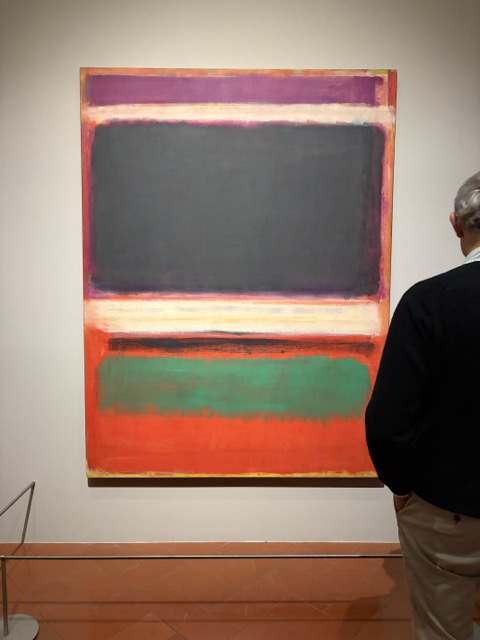
Rothko in Florence – Palazzo Strozzi, Florence, through August 23
There are exhibitions you visit, and others you enter. Florence hosts a remarkable tribute to Mark Rothko, conceived for Palazzo Strozzi as a dialogue between his immersive fields of color and the measured harmony of Renaissance architecture. Over 70 works trace his evolution, where color becomes space, and painting becomes experience. As you walk through the exhibition, you’ll get a sense for how Rothko’s surroundings and his time spent in Florence inspired his art. You will connect with the work and emerge with a renewed understanding of Rothko and his experiences.
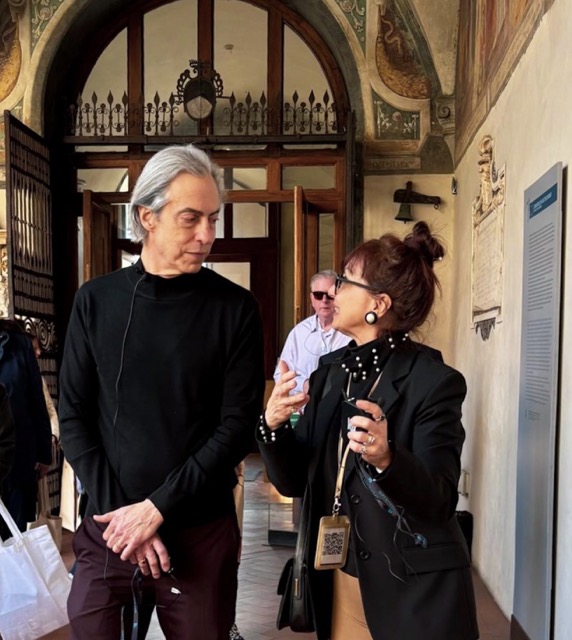
Beyond the palace, the exhibition extends into the city itself: a rare encounter between Rothko and Fra Angelico at the Museo di San Marco, and a dialogue with Michelangelo within the striking architecture of the Biblioteca Medicea Laurenziana. As you explore the other locations connected to Rothko and his work, you’ll truly begin to see the city of Florence through his eyes and appreciate what it meant to him.
During the opening days, Lucia Montuschi and Exclusive Connection had the privilege of designing and hosting a series of private visits and special openings in Florence, for an international group of artists and collectors from Rothko Chapel, joined by Christopher Rothko.
Tintoretto and the Genesis – Gallerie dell’Accademia, Venice, through June 7

In Venice, a masterpiece returns to light. After an extensive restoration, TIntoretto’s Stories of Genesis cycle re-emerges in its full intensity, revealing a pivotal moment in the artist’s journey, where narrative begins to open into landscape. A unique opportunity to witness these works as they were meant to be seen: luminous, dynamic, and deeply alive.
Thanks to the lengthy restoration process, you have a special opportunity to connect with Tintoretto’s work and biblical stories in a new way. Information here.
Bernini and the Barberini Family – Palazzo Barberini, Rome, through June 14
In Rome, the Baroque reveals its origins. This major exhibition traces the defining relationship between Gian Lorenzo Bernini and his most influential patron, Pope Urban VIII. Set within Palazzo Barberini, the exhibition offers a rare perspective on how the language of the Baroque took shape, at the intersection of ambition, patronage, and artistic genius.
You’ll have the opportunity to explore the Baroque in a fresh way. You’ll also have the unique chance to appreciate the Baroque in the context of the consecration of the new St. Peter’s Basilica, which was exactly four hundred years ago. Information here.
Van Dyck, the European – Palazzo Ducale, Genoa, through July 19
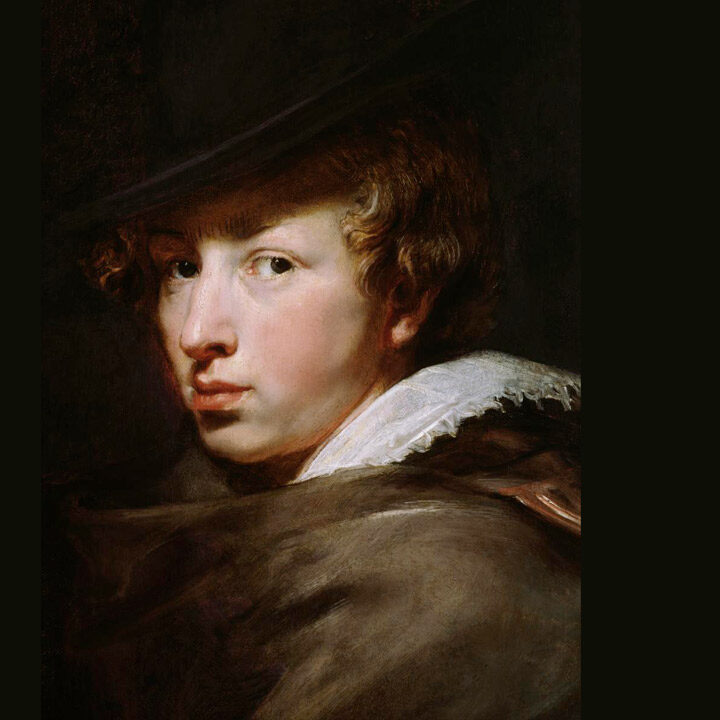
Photo information
From https://palazzoducale.genova.it/en/mostra/van-dyck-the-european/
In Genoa, the genius from Antwerp reveals himself. This major exhibition brings together over 50 works by Anthony van Dyck, tracing the artist’s evolution across Antwerp, Genoa, and London. Set within the historic rooms of Palazzo Ducale, the exhibition reveals Van Dyck’s extraordinary ability to interpret power, identity, and beauty through portraits that remain, centuries later, strikingly alive. Museums across Europe have banded together to make this exhibition possible. They provide you with the opportunity to explore an artistic journey spanning cities, of which Genoa is the heart. Information here.
Tarot. Origins, Cards, Fortunes – Accademia Carrara, Genova, through June 2
In Bergamo, a journey through symbols and time. Spanning seven centuries, this exhibition traces the evolution of tarot: from a refined pastime of Renaissance courts to a system of imagery that continues to shape imagination and meaning today. At its heart, a rare reunion: the Colleoni deck, one of the most complete in existence, was brought together after more than a century. Around it, a wider narrative unfolds: of art, belief, and the enduring power of images to speak across time. You’ll learn about the origins of tarot and how the cards have been used in Italy. You’ll leave with a better understanding and an appreciation of tarot’s uses as well as the art on the cards. Information here.
Flowers. Wonderful Nature – Chiostro del Branamante, Rome, through September 6
Expanding beyond the symbolism of flowers, this exhibition opens to a broader vision, where art, science, and ecology intersect to explore nature as a living, ever-evolving system. Across works ranging from the 17th century to contemporary and AI-driven practices, a dialogue unfolds between past and future, revealing how we continue to interpret, shape, and imagine the natural world. By visiting this exhibition, you have the opportunity to see how our perception of the natural world has shifted over time. It may even inspire a change in your perception of the natural world. Information here.
Each exhibition provides an opportunity for reflection and to see Italian art and history in new ways. A visit to one – or all six – will give you a meditative experience as you enjoy the museums, but will leave an impact as you reflect on what you’ve seen long after.
Post written by Sophia Cossitt-Levy

