Picture this: You’re in the heart of Florence at the Convent of San Marco viewing their collection of Fra Angelico’s work. You find yourself drawn in by the convent’s vast collection of his frescoes. A sense of peace washes over you as you look at them. You appreciate the detail and the meaning behind each one. You feel the passion Fra Angelico must have felt as he worked.
This sense of peace and calm you feel as you observe Fra Angelico’s work is nothing unusual. Connecting with art and visiting museums is known to improve one’s mental health. Individuals in therapy may partake in a variation called creative arts therapy, where patients engage with music, dance, storytelling, theatre, and the visual arts to heal. With a focus on the visual arts, patients may either create their own art or engage as an observer.

Art is Beneficial for Your Mental Health
The Mayo Clinic notes that “In addition to creative arts therapy, the arts also can be beneficial to your physical and mental health when you experience them – as an appreciator or curator… Art has the potential to go beyond treating symptoms and improve your whole self – including physical, mental, and emotional elements.” So, the museum visit on your next trip to Italy will do more than connect you with the culture. It will also offer benefits to your health.
Further research in recent years supports the idea that museum visits can be beneficial to mental health. A 2024 study, during which participants went on guided visits at Palazzo Maffei Fondazione and had discussions about the artwork they say, noticed a reduction in anxiety and depression for those participants. Meanwhile, they also experienced higher self-esteem and creativity. The same study also pointed out that “Museums also provide restorative breaks from daily life, foster social cohesion, and reduce isolation, supporting both individual and community well-being.” Art seems to be a way to make people feel seen or understood. A visit to a museum clearly has many benefits.
In response to studies like these, museums have been creating their own art and well-being programs. For instance, the Whitney Museum of American Art in New York has a partnership with NYU Langone, where they engage students, faculty, and staff in a program meant to build empathy and self-reflection. They also work with other hospitals across New York City to engage healthcare workers in art and reflection. The creative process provides them with an outlet, reducing burnout in a difficult field of work.
The Italian Way
In Italy, there have been a number of initiatives across museums. Palazzo Maffei, where an aforementioned study took place, has the MINERVA project. MINERVA, an acronym for Museum, Innovation, and Neurosciences: Effects of and Reactions to the Value of Art, “aims to create a cultural path within a museum setting and to evaluate the impact that artistic experience, especially museum experience, can have on improving psychological well-being, anxiety-depressive symptomatology, and general functioning.” Their program is structured exactly like the study was. Participants enjoy guided tours, each lasting less than an hour and focusing on the appreciation of the museum’s collection.
Beyond this initiative, there are plenty more throughout Italy. Turin is home to the Luoghi Comuni Project, which involves a number of cultural institutions throughout the city. Its goal is to be more inclusive of those facing mental health challenges. In this program, participants have the chance to connect with others and step away from care facilities into a warmer, more inviting environment. It has been successful in its efforts and has also helped to reduce stigma surrounding mental health.
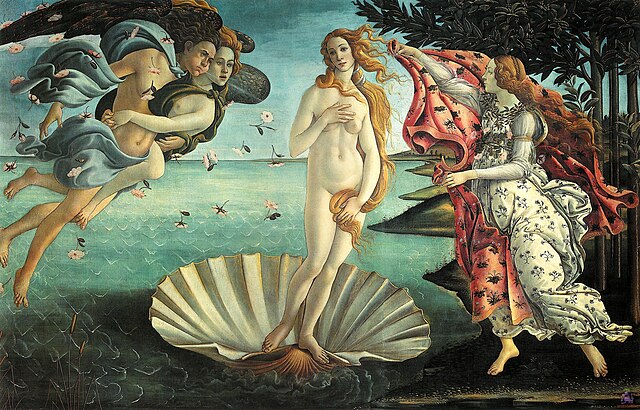
Italy is such an important place for exploring the connection between mental health, art, and visiting museums. It was home to the Italian Renaissance, a period during which art and culture were at the forefront. From this period came many famous works of art, including Fra Angelico’s frescoes, The Birth of Venus, painted by Sandro Botticelli, and Michaelangelo’s David. Though many people come to see these works and galleries might be crowded, the world still seems to fall away when you look at these pieces. It becomes an intimate moment, just you and the art. It provides a moment to reflect on the artist, the meaning of the work, and how it fits into the world today. One may even consider the people who came before them to interact with the art and the people there now. Though you may or may not actually speak with them about what you see, there is a spark of connection in the awe that you both feel. A walk through a museum can also serve as a meditative practice. It can be calming to wander through the galleries, observing everything around you. Additionally, many pieces of art are grounded in religion. For many, interacting with these sacred works of art can be an important experience. It can function as a means of connection with others, or even as a more personal experience in understanding your own beliefs.
Italy, with its rich art scene and countless museums, can offer all of this and more. The Uffizi Gallery in Florence can offer a look at some of the most famous Renaissance art, as well as sculptures from ancient times. The Madre Museum in Naples offers a step away from these eras and gives a glimpse into contemporary art. With all that Italy has to offer in art and culture, there is bound to be something for everyone.
Sources
- https://mcpress.mayoclinic.org/living-well/the-intersection-of-art-and-health-how-art-can-help-promote-well-being/
- https://pmc.ncbi.nlm.nih.gov/articles/PMC12662043
- https://whitney.org/education/community/whitney-wellness
- https://palazzomaffeiverona.com/en/evento/progetto-minerva-well-being-and-art/
- https://icom.museum/en/news/improving-mental-health-through-museums-italys-exploration-of-the-healing-potential-of-museum-spaces/
Written and researched by Sophia Cossitt-Levy for Exclusive Connection

